
Choose a bag around what it will carry and how people will use it. The right starting question is simple: what must fit inside, and what should the recipient do with the bag afterwards?
A conference bag may need room for a folder and water bottle. A gift bag may need enough depth for a box. A retail tote may need comfortable handles for repeated use. These details are more useful than choosing a size from appearance alone.

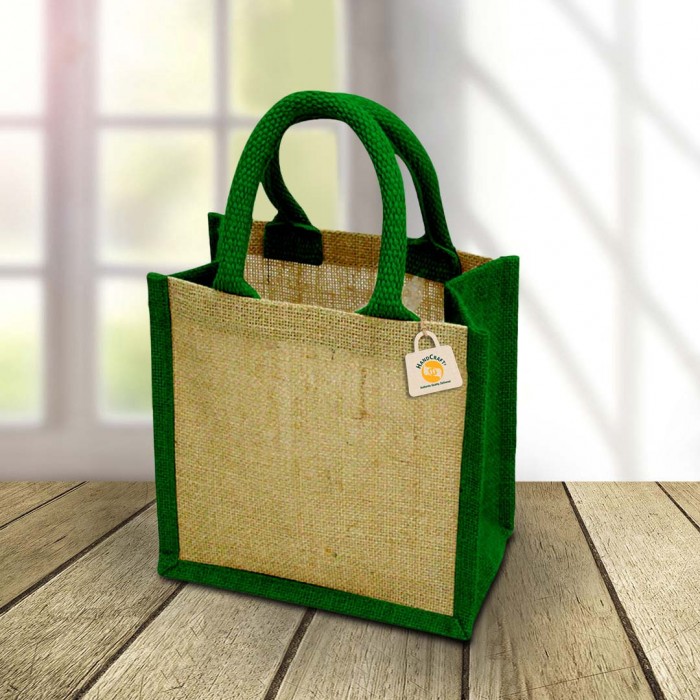
Match the material to the job
Jute gives a visibly textured surface and a distinctive natural-fibre appearance. Consider how a large, simple logo will read against that texture. Cotton offers different fabric weights and constructions, so identify the specific fabric rather than asking for a generic cotton bag. Canvas describes a construction, not a universal thickness or weight.
Juco combines jute and cotton. The exact composition and finish should be established for the product being quoted. A material name alone does not confirm lining, lamination, washability or a particular carrying capacity.
For any material, explain whether flexibility, structure, print detail or the feel in the hand matters most. Discuss lining and lamination as separate choices. A coating or additional component also affects how the finished bag should be described in environmental messaging.
Measure the contents first
List the largest item and the items that will sit beside it. Note their width, height and depth, then allow practical space for inserting and removing them. A flat bag and a gusseted bag of similar width and height do not offer the same usable space.
Use width × height × gusset for a bag with depth and state whether the figures are centimetres or inches. If you need the opening to accommodate a rigid box, say so rather than relying only on the finished external measurements.
Decide how it should be carried and closed
Think about hand carrying or shoulder carrying, the space needed above the opening and the weight of the contents. A zip, Velcro, button or pocket can add usefulness, but each feature should earn its place in the specification.
For bottle and jar bags, identify the container dimensions and quantity per bag. For event bags, check whether an internal pocket or closure actually helps the recipient. For gifting, consider how the bag looks when filled, not only when lying flat.
Make the first comparison fair
Compare proposals using the same material, dimensions, handle, print and packing assumptions. A lower price for a smaller bag or a different fabric is not a like-for-like comparison.
Send us the purpose, contents, reference style, quantity and destination. Minimum order starts at 1,000 pieces; some patterns and styles require higher quantities. We can then discuss the specification that suits your requirement.