Choosing Bags for NGO and CSR Distribution Programmes
Respecting nature is a theme of many CSR and NGO programmes, and a reusable bag is a common, visible part of them. Organisations distribute kits for schools, health camps, community events, tree-planting drives and awareness campaigns, and the bag carries the kit and the programme’s identity afterwards. Choosing the right bag means starting with what goes in it, how it is handled and when it is needed. HANDCRAFT supplies the bags. Contents, assembly and distribution remain with your organisation or implementation partners.
1. Start with the contents
List what each kit contains, with approximate sizes and weight. Examples include:
- school kits: notebooks, a geometry box, a water bottle;
- hygiene kits: soap, towels, sanitary products;
- agriculture or planting kits: seed packets, small tools, saplings;
- awareness kits: leaflets, a booklet, a reusable item.
The heaviest and bulkiest items set the minimum size and construction. Saplings or soil may need a different bag type entirely, such as a grow bag. See Jute Grow Bags.

2. Think about handling and distance
Explain who will carry the kit, the distance involved and the transport conditions. For children’s programmes, include the age range and check the proposed handle length and loaded bag with the intended users. Transport packaging must be planned separately; do not assume the bag alone protects kit contents. Share these requirements so a suitable construction can be discussed.

3. Plan for life after distribution
A bag that becomes a school bag, shopping bag or work bag keeps serving the recipient. Consider a size and style useful in daily life, not only for the kit. Plain, practical bags usually suit well, and recipients are more likely to keep using a bag that looks like an ordinary everyday carrier.

4. Branding with respect for recipients
Programme branding often includes the funding organisation, the implementing NGO and sometimes government or partner logos. Keep it modest; recipients will carry the bag in their communities. Confirm permission and approval for each logo. Short messages are fine, but avoid presenting recipients as beneficiaries in a way they might find uncomfortable. Use local languages where helpful, checked by native speakers. For message wording, see Pledge and Campaign Messages on Branded Bags.
5. Choose material sensibly
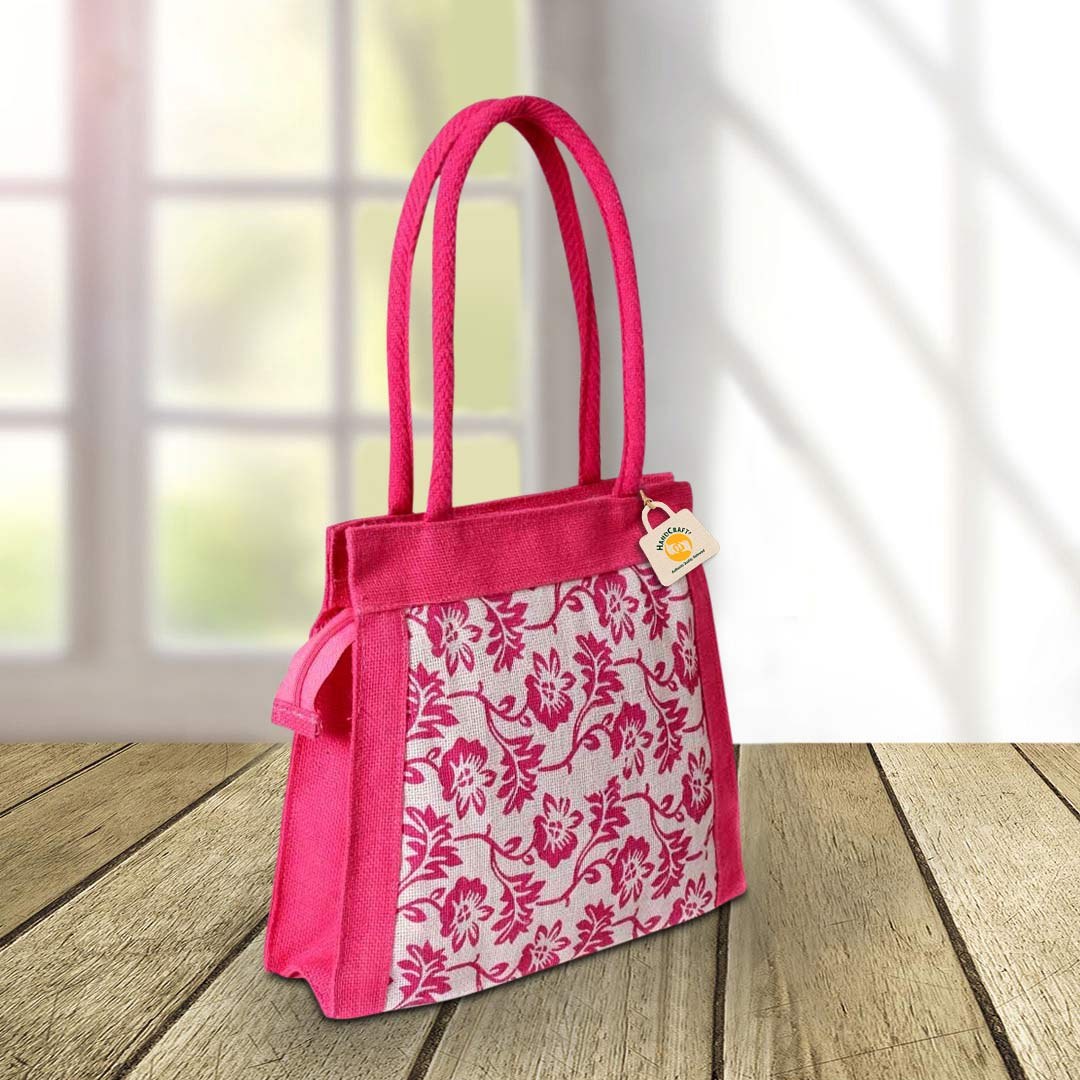
Compare the fabric and construction against the kit’s contents, loaded weight and intended users. Cotton, jute and juco are available in different constructions, so the material name alone does not establish weight, comfort or carrying suitability. Juco is priced above standard jute. Natural colour means undyed fabric; dyeing adds two weeks and extra charges. HANDCRAFT uses azo-free inks.
6. Align with your schedule
CSR programmes often have fixed dates: a school term, a festival, an awareness day or a financial year-end. Work back from the distribution date, allowing time for artwork approvals from all partners, production, transport, kit assembly and dispatch to field locations.
Working with implementation partners
Many CSR programmes are delivered through NGOs or field partners. Agree early who places the bag order, who approves artwork, where bags are delivered and who receives and checks them. If kits are assembled at a partner’s warehouse, deliver bags there and allow time for assembly before field dispatch. Share the partner’s contact and receiving hours in your enquiry so delivery details can be confirmed. Clear roles avoid delays when several organisations are involved.
7. Keep reporting honest
Report what you can verify: the number of bags supplied, the kits distributed and the locations reached. Avoid claiming environmental or social outcomes from the bags themselves without evidence. HANDCRAFT supplies the bags; kit contents, assembly and distribution remain with your organisation or implementation partners.
Bags for CSR distribution: checklist
- Kit contents, sizes and weight listed
- Handling, distance and recipient age considered
- Bag useful after distribution
- Logos approved by all partners
- Material and colour chosen
- Distribution date and delivery points fixed
- Reporting limited to verifiable facts
Planning a school, health-camp or community distribution? Send the kit contents, quantities and distribution date through the Bulk Enquiry route for an individual quotation.