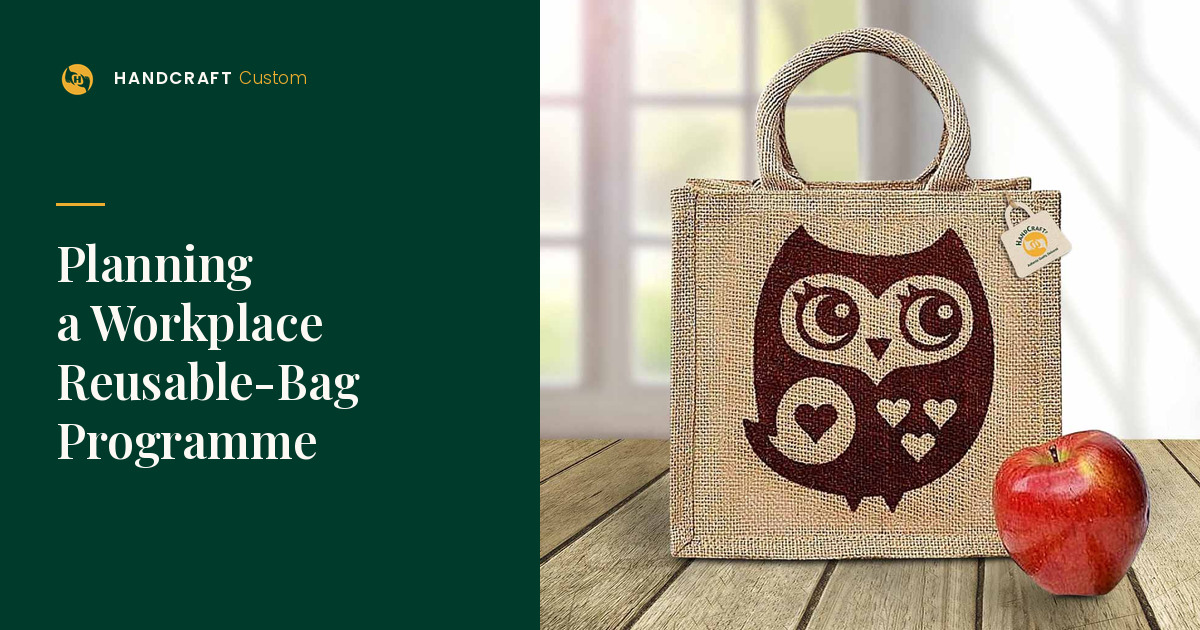
Planning a Workplace Reusable-Bag Programme
Many employers give reusable bags to staff as part of a welcome kit, a sustainability week, an anniversary or an annual gift. When the programme is planned around how employees actually live and work, the bags are far more likely to become part of daily routines. When it is planned around a deadline alone, bags can end up unused in drawers. This guide walks HR, administration, facilities and procurement teams through planning a workplace reusable bag programme from first idea to delivery.
Start with the purpose of the programme
Be clear about why the bags are being given. Common purposes include:
- Onboarding: a bag in the welcome kit for new joiners, ordered in recurring batches.
- Workplace initiative: a bag distributed during a sustainability or wellbeing week, often alongside a request to reduce single-use carriers in the office canteen or store.
- Recognition and gifting: an annual or festival gift for all employees, sometimes holding other gift items.
- Site-specific use: bags for a particular site, such as a campus store or a factory canteen.
The purpose shapes everything else: the bag type, quantity, branding and timing. Agree it with stakeholders before asking for quotations.
Know your recipients
A head-office team that commutes by metro, a field sales team that drives, and a factory workforce that walks to a canteen all carry different things. Ask a few representatives what they carry on a normal day: a laptop, lunch box, water bottle, documents, gym kit or shopping. A short informal survey can prevent an expensive mismatch. If your workforce is spread across sites or countries, note that too, because it affects packing and delivery planning.
Choose a bag type that fits daily use
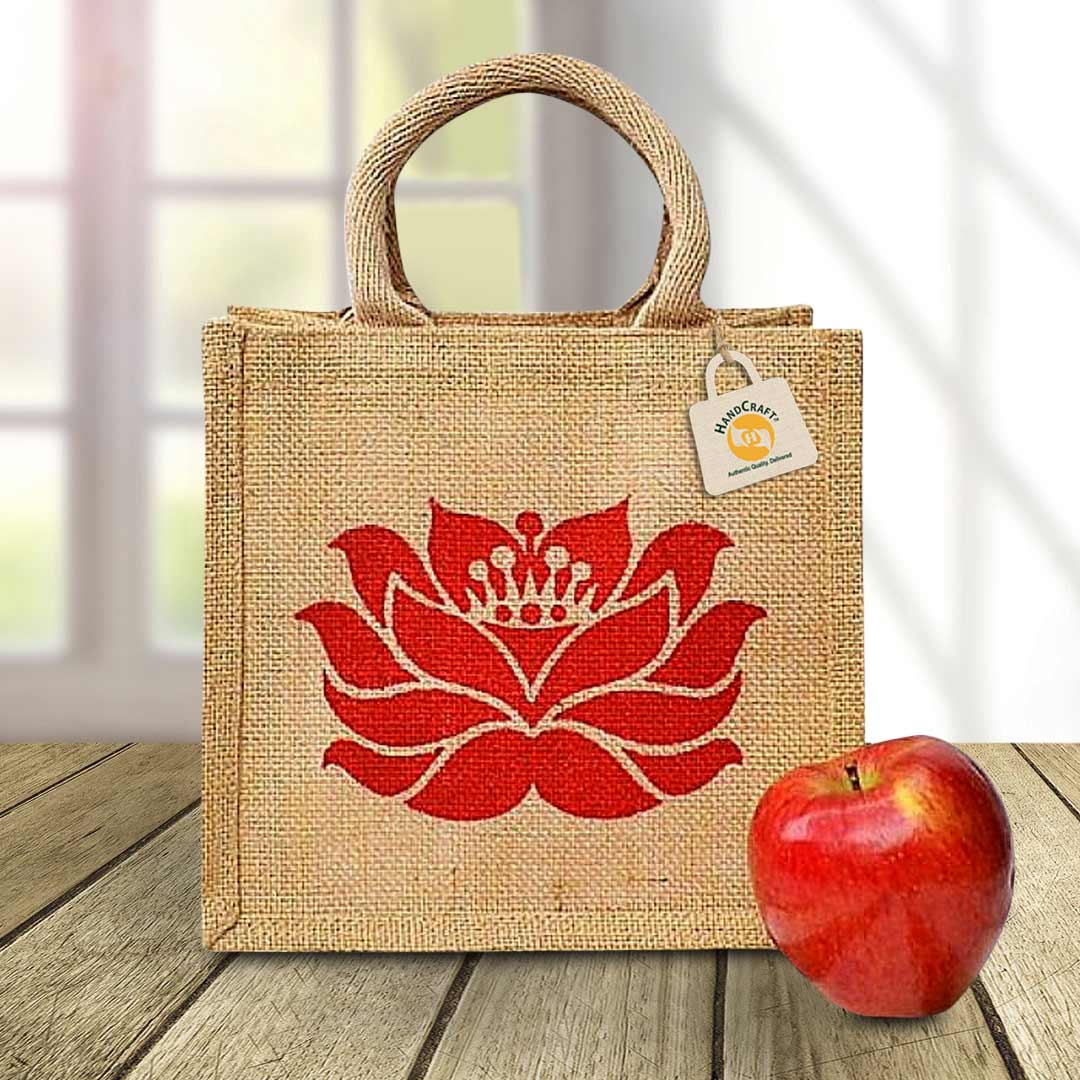
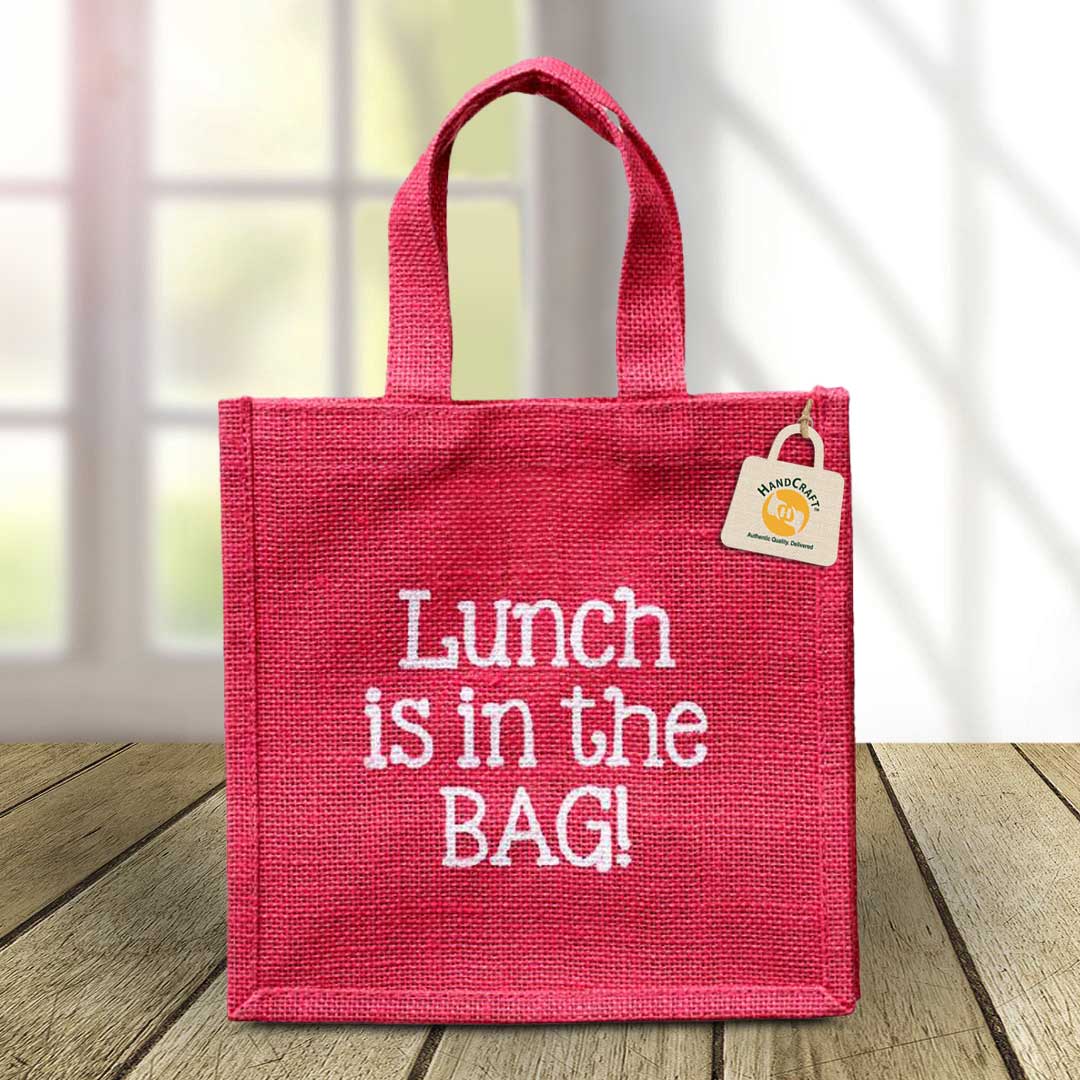
For everyday carry, a mid-size jute or juco tote with gussets often suits office staff. Juco, a blend of jute and cotton, is premium and costs more than jute, but it has a smoother surface that suits finer printing and gift programmes. Cotton is lighter and softer for those who prefer it. Lunch-style bags suit canteen use, and laptop or conference bags suit staff who travel. If you are unsure, shortlist two options and compare them against the recipients’ typical items. See Designing a Jute Bag for Everyday Repeat Use for detailed design points.

Size, handles and closures
Confirm dimensions against real items, such as an A4 notebook, a standard lunch box and a bottle. Long handles suit shoulder carry; short handles suit hand carry. A zip or inner pocket helps commuters keep items secure but adds cost and time, so include it only if it will genuinely be used.

Branding employees are happy to carry
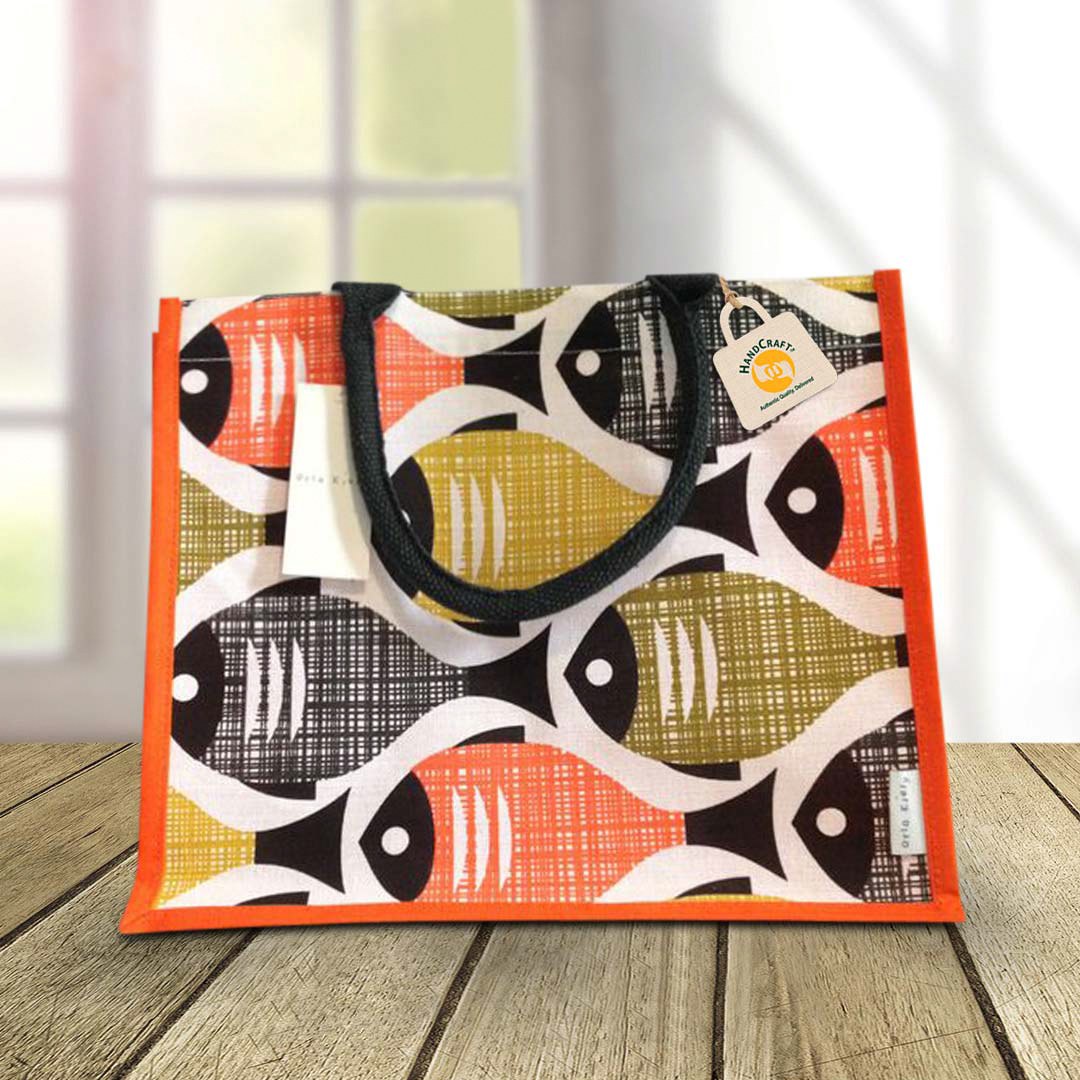
Employees carry bags they would choose for themselves. A calm, permanent logo or a simple message usually gets more daily use than a dense design full of event details. Avoid printing dates or one-off campaign slogans if the bag is meant to last. Natural colour means undyed fabric and keeps the look simple; dyed colours are possible but add time and cost. HANDCRAFT uses azo-free printing inks, with the printing method confirmed for each order.
Working out quantities
Base the quantity on headcount plus realistic allowances:
- current employees at each site, including contract staff if they are included;
- expected new joiners for an onboarding programme over the next period;
- a modest reserve for replacements and visitors, agreed internally.
Avoid ordering far beyond the likely need. Unused bags waste budget and undermine the purpose of a reuse programme. For onboarding, it can be more practical to plan repeat orders with the same artwork than one very large order.
Fix the date the bags must arrive
Work back from the distribution date. Allow time for artwork approval, production, transport to your sites and internal packing.
HANDCRAFT supplies the bags only. Filling, packing gift items and distributing to employees are handled by your team or your own vendors, so include that time in the plan.
Communicate with employees
A short note with the bag explaining why it is being given, how to care for it and where it can be used helps. Keep the message practical and avoid promising environmental results that the programme cannot measure. See Helping Recipients Reuse Your Branded Bag.
Workplace reusable bag programme checklist
- Purpose agreed with stakeholders
- Recipient profile and typical items noted
- Bag type and dimensions shortlisted
- Handle type, closure and pockets decided
- Permanent, calm branding with artwork files ready
- Quantity per site, plus any reserve
- Required arrival date and delivery addresses
- Internal plan for packing and distribution
Questions buyers ask
Can we order in batches for onboarding?
Yes, a programme can be planned as repeat orders using the same approved artwork. Share expected volumes and timing.
Can bags be delivered to several sites?
List every site and its quantity in the enquiry. Delivery arrangements are confirmed in the quotation, not assumed. Browse reusable jute bags for formats.
Planning bags for employees? Send headcount per site, intended use, branding and the date bags must arrive through the Bulk Enquiry route for an individual quotation.