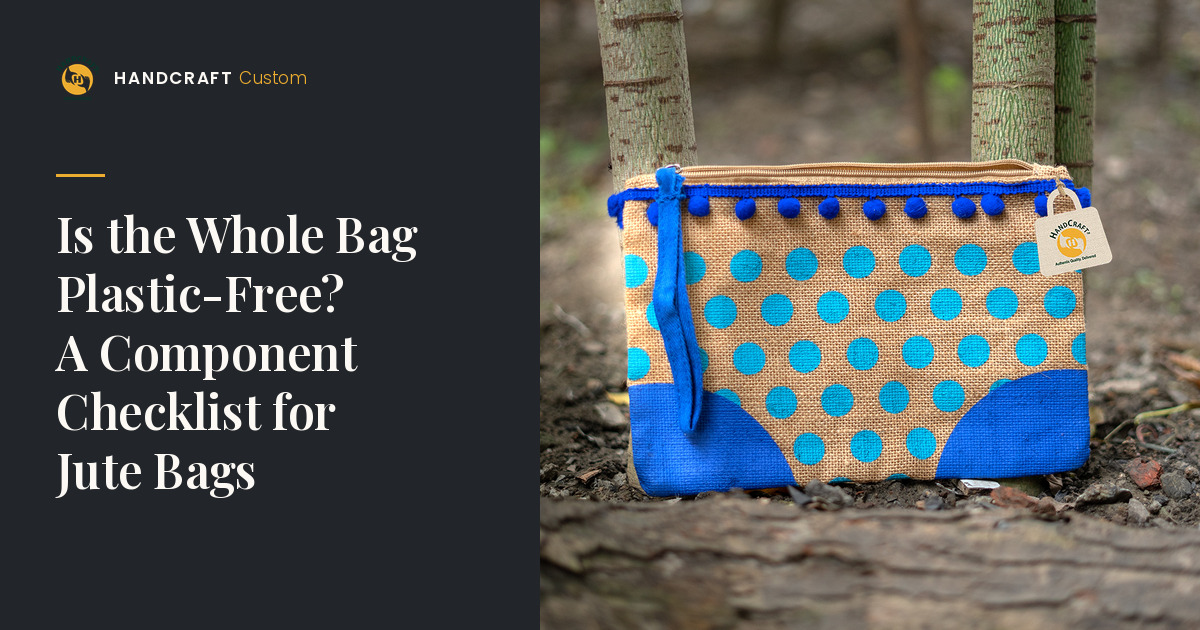
Is the Whole Bag Plastic-Free? A Component Checklist for Jute Bags
Buyers often choose jute because they want to avoid plastic. Jute itself is a natural plant fibre. A finished bag, though, is made of several components, and some of them may contain synthetic material. If your organisation intends to describe a bag as “plastic-free”, every part needs to qualify. This checklist helps you review each component and ask the right questions. For a broader discussion of environmental claims, see Is a Jute Bag Really Eco-Friendly?
Why the distinction matters
A “plastic-free” claim is specific and checkable. If a recipient notices a plastic window or an inner coating, the claim, and your organisation’s credibility, can be questioned. A bag can be a sound choice without being plastic-free. The aim is to describe it accurately.
Plastic-free jute bag component checklist
1. Body fabric
Jute is a natural fibre. Juco is a blend of jute and cotton, both natural fibres. Ask for confirmation if the fabric contains any synthetic blend.

2. Lamination or inner coating
Many jute bags are laminated on the inside to add stiffness, protect contents from jute fibres or improve water resistance. Laminations are commonly plastic-based. If you need plastic-free, ask for an unlaminated construction and consider whether that suits the contents.
3. Lining
Linings may be cotton or synthetic. Specify the material you need.

4. Windows
Clear windows on gift bags are typically made of a transparent plastic film. A window bag is therefore usually not plastic-free, even when the body is jute. See Jute Bags With Windows
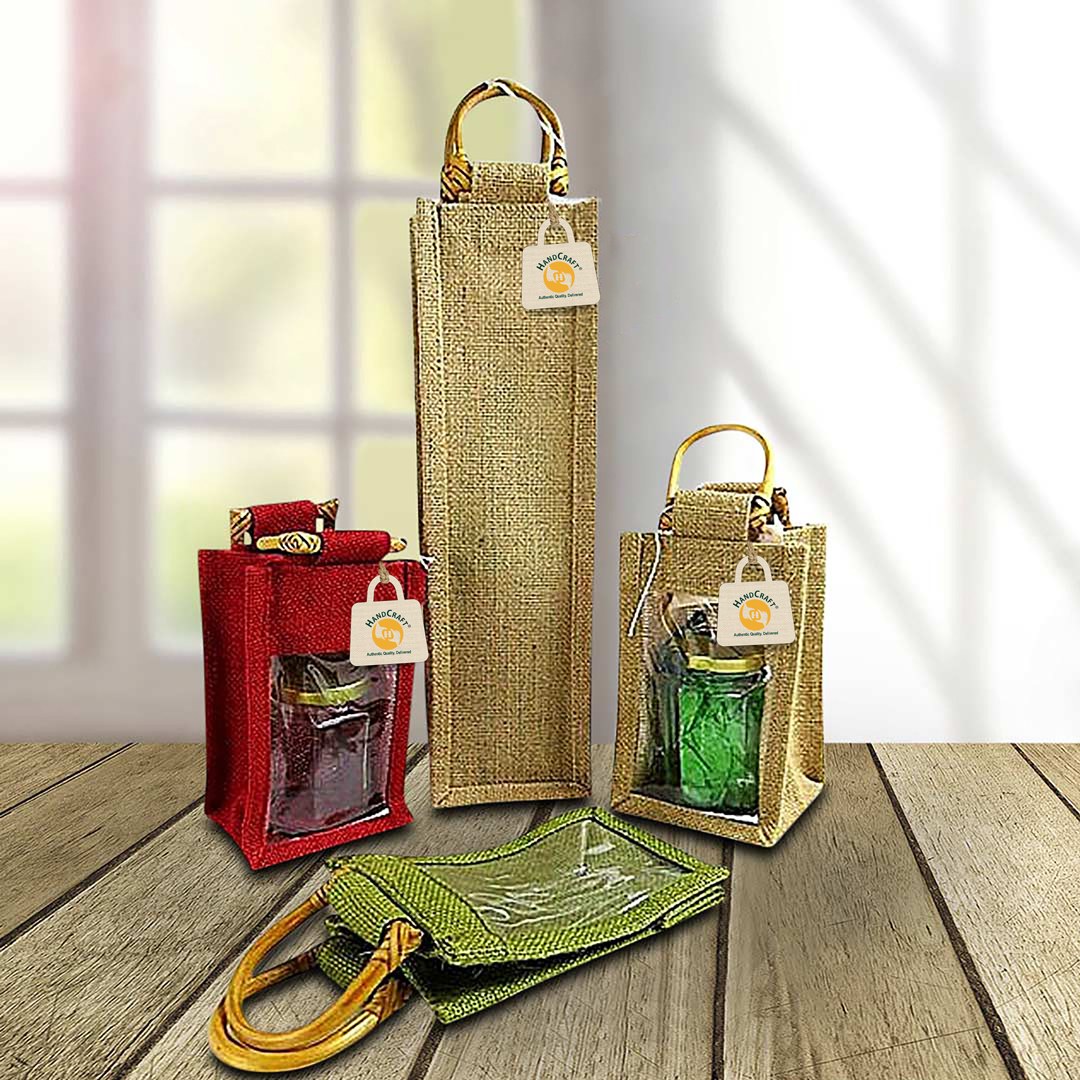
5. Handles
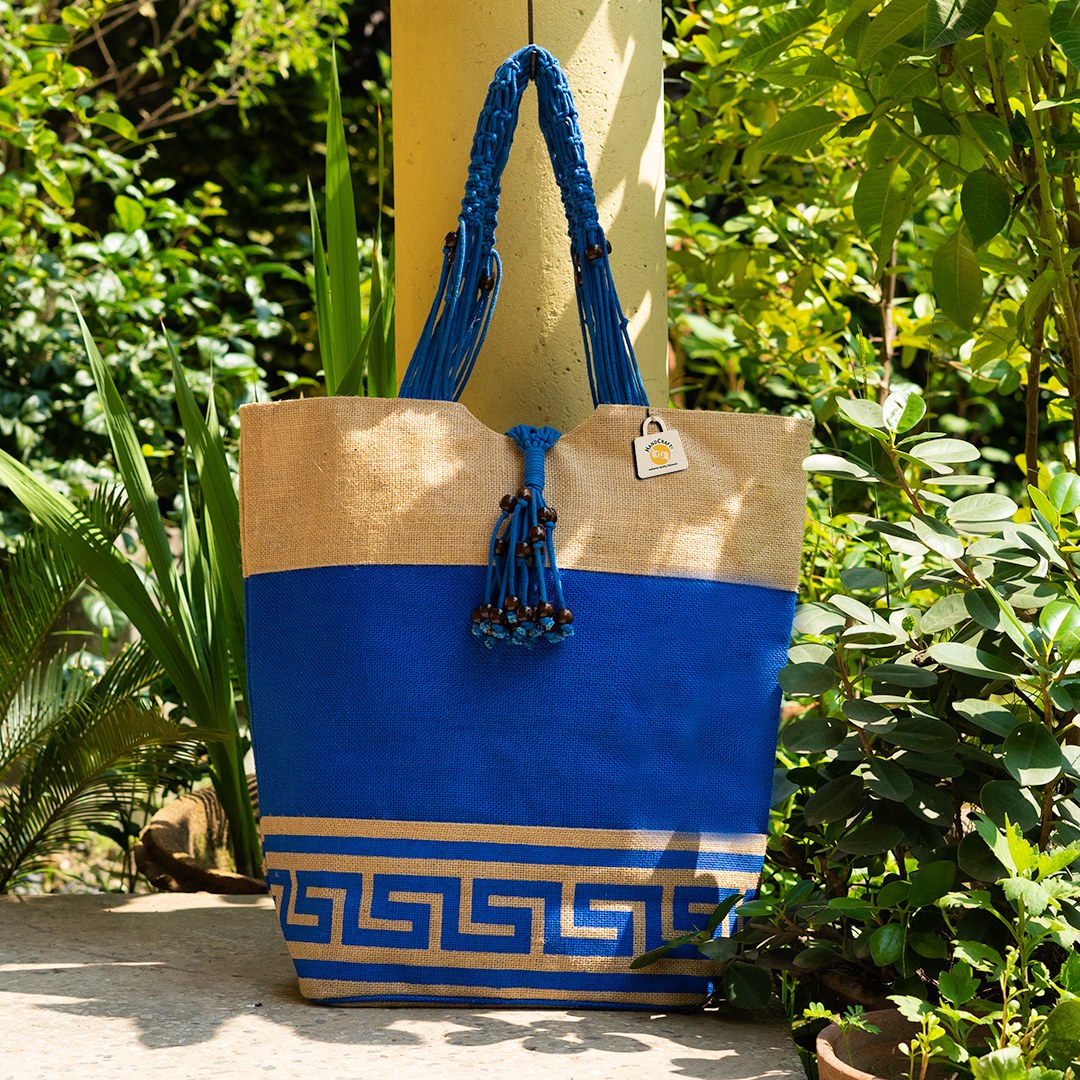
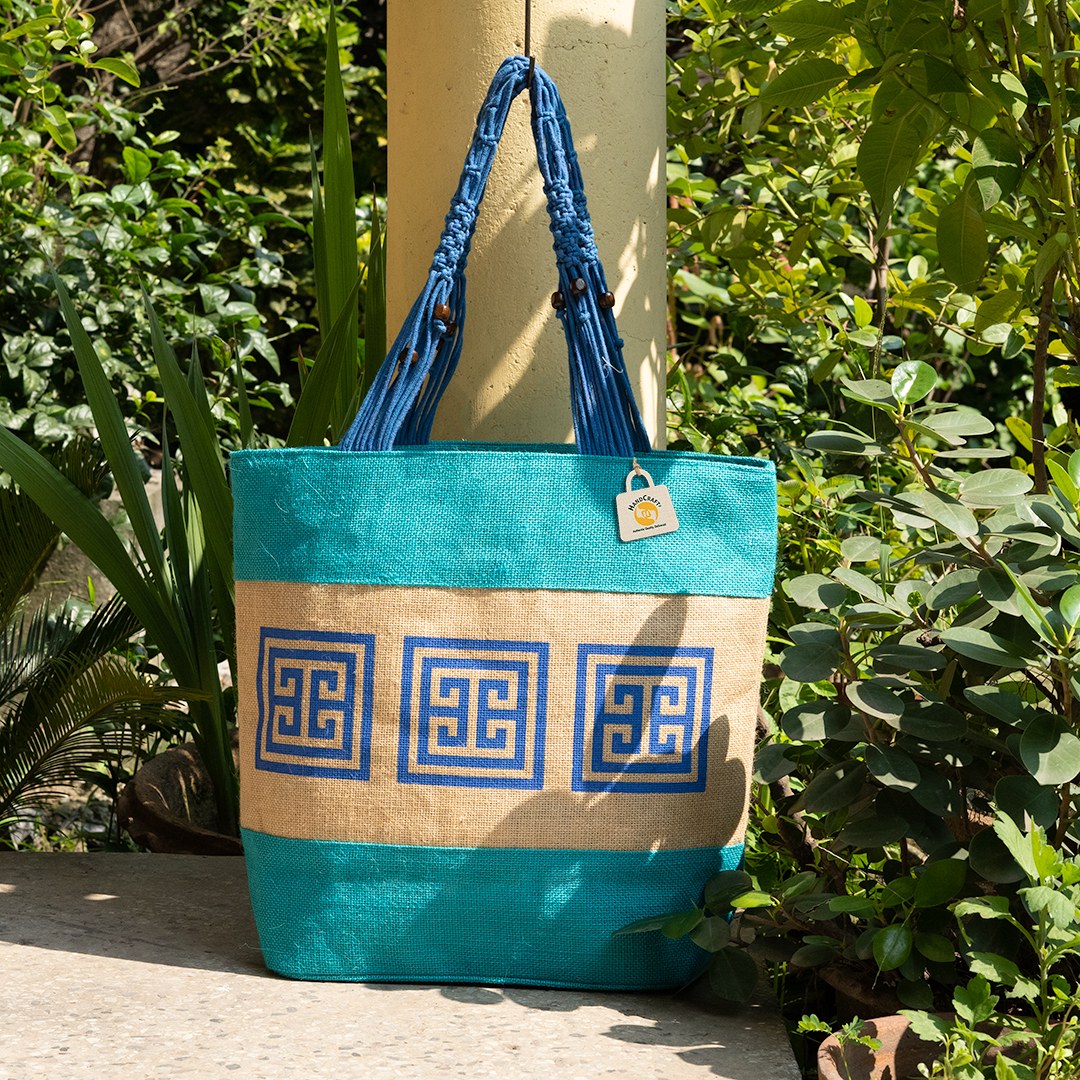
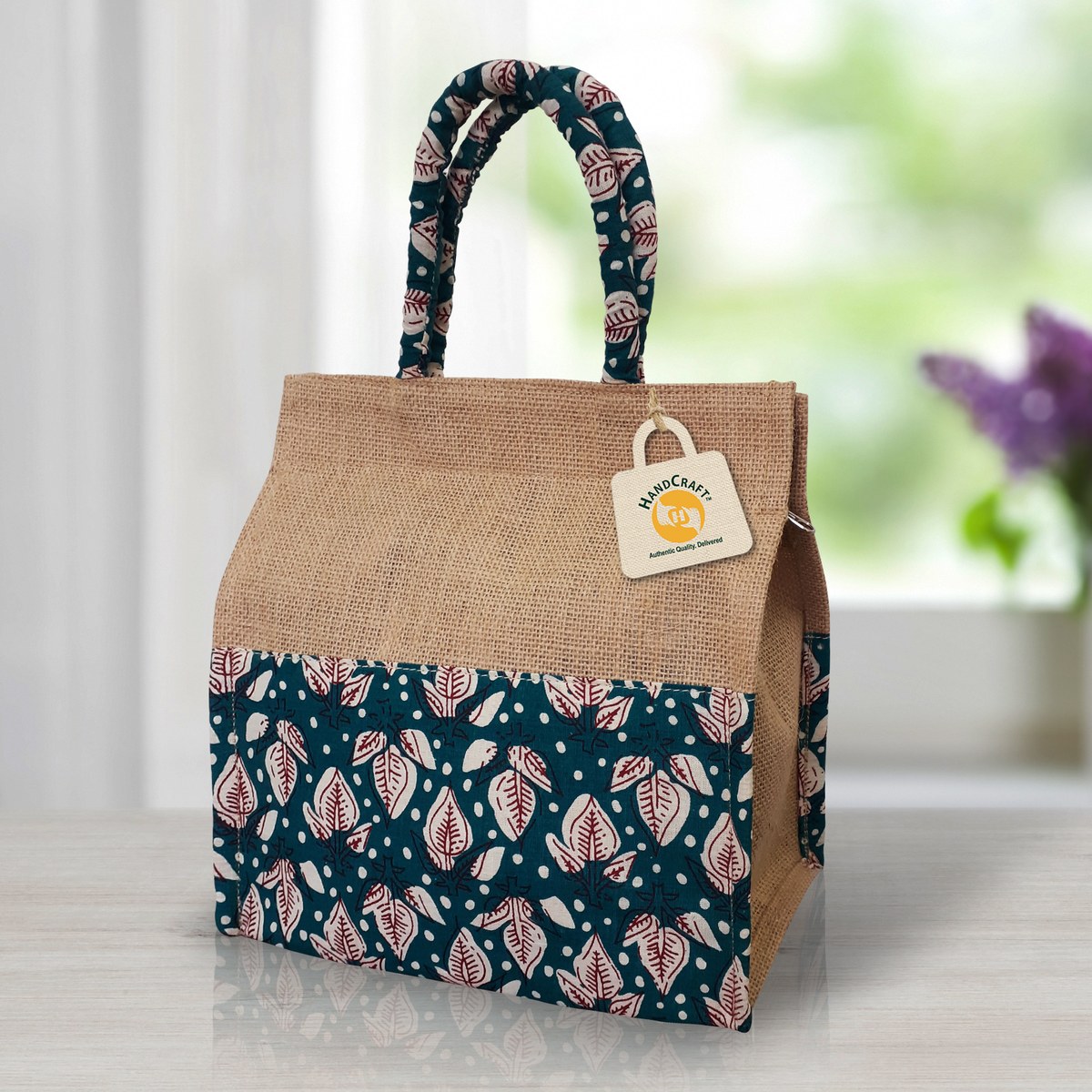
Handles may be jute rope, cotton, jute webbing or padded jute, and some have inner cores or synthetic components. Confirm the handle construction.
6. Zips, buttons and fasteners
Zips commonly have synthetic tapes and teeth, or metal teeth on synthetic tape. Buttons and toggles can be made of many materials. If plastic-free is required, discuss alternatives such as ties or no closure.
7. Eyelets and trims
Eyelets are often metal; trims and piping vary. Check the specification.

8. Stitching thread
Sewing thread is frequently polyester or a polyester–cotton blend because of its strength. Ask whether cotton thread is an option if this matters to your claim.

9. Print
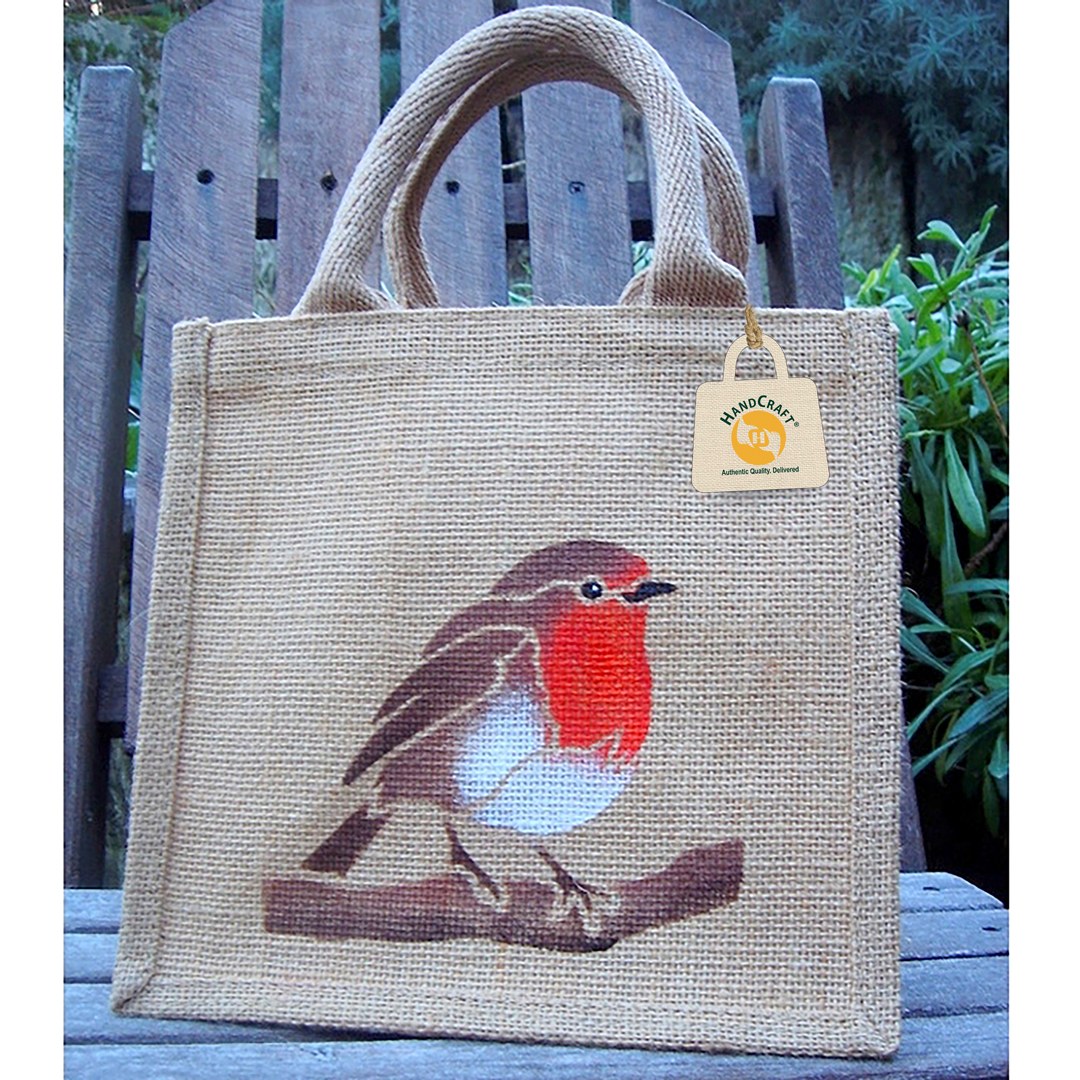
Printing inks are a separate category. HANDCRAFT uses azo-free printing inks; the printing method is confirmed for each order. Ink chemistry is not the same as a plastic-free claim, so ask specifically if it matters for your communication.
10. Labels, tags and packaging
Sewn-in labels, swing tags and outer packaging for shipping can include synthetic materials. Decide whether your claim covers these. Many organisations limit the claim to the bag itself and describe packaging separately, which is clearer for recipients.
How to word it if not every part qualifies
- “Made from jute, a natural plant fibre.”
- “Jute body with a cotton lining.”
- “Unlaminated jute bag.” (if confirmed)
- Avoid “plastic-free”, “100% natural” or “fully biodegradable” unless each component qualifies.
Questions to send with your enquiry
- Is the body fabric 100% natural fibre?
- Is the bag laminated or coated, and with what?
- What are the lining, handles and thread made of?
- Does the bag include a window, zip or other fastener?
- Which components could be changed to natural-fibre alternatives, and how would that affect use and timing?
Asking these together gives you one clear answer to review with your communications team before any claim is made.
Practical trade-offs
Removing lamination changes stiffness and moisture resistance. Removing a zip reduces security. Removing a window changes the presentation. Decide which matters more for your programme: a strict plastic-free claim or a particular feature. See Claiming Plastic Reduction for a Bag Programme
Include it in your enquiry
If plastic-free is a requirement, state it clearly in your enquiry and list the components you want reviewed. HANDCRAFT can advise which constructions are possible for the specific order.
Questions buyers ask
Is an unlaminated jute bag automatically plastic-free?
Not necessarily. Thread, handles, trims and print also need checking.
What if lamination is needed?
Then describe the bag accurately, for example “jute bag with laminated lining”. See is a jute bag really eco-friendly?.
Want a bag you can describe precisely? List the components you need to avoid through the Bulk Enquiry route, and HANDCRAFT will confirm construction and quote.