Is a Jute Bag Really Eco-Friendly? How to Assess the Whole Bag
A jute bag’s environmental claims need to account for the whole product and how it is used. Jute identifies a fibre; it does not describe every lining, coating, handle, closure or trim. Before calling a bag lower-impact, define the comparison and the evidence behind it. The checks below help organisational buyers describe their chosen construction accurately.
Step 1: Separate the fibre from the finished bag
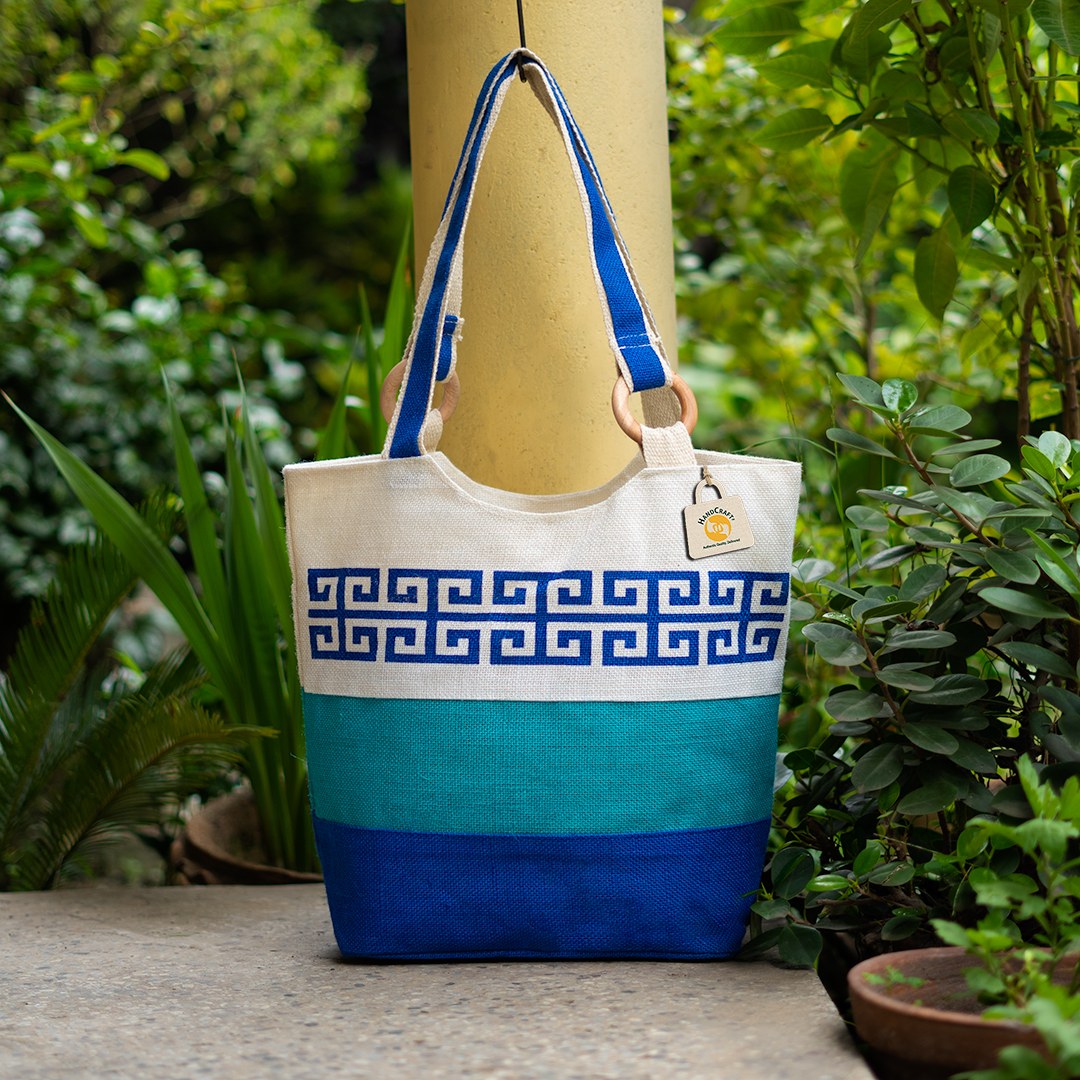
Jute is a natural plant fibre, and that is a genuine attribute. A finished bag, however, may include:
- Lamination or lining: often a plastic film or coating that improves water resistance and structure, but means the bag is no longer a single natural material.
- Windows: clear panels are usually plastic film.
- Handles and trims: cotton, jute, synthetic webbing, cane, eyelets or zips.
- Print: HANDCRAFT uses azo-free inks. Azo-free is a specific chemistry statement; it does not make a bag organic, non-toxic in every sense, or food-safe.
List the components of the exact bag you are buying. That list is the foundation of any truthful environmental description.

Step 2: Consider natural colour
Natural colour means undyed fabric. Choosing natural colour avoids the dyeing step for the body fabric, and many corporate buyers prefer the look. That is a factual description you can use. Avoid turning it into a quantified saving without measured data.

Step 3: Reuse is the real lever
Any reusable bag only makes sense environmentally if it replaces repeated single-use bags or other items. A sturdy bag that is used once and discarded is not an improvement. Design for reuse with a sensible size, comfortable handles and calm permanent branding, and give it to people likely to use it. Be cautious about claiming a number of uses or a replacement ratio; those depend on recipient behaviour you have not measured.
Step 4: End-of-life depends on construction and local systems
Natural jute fabric can break down in suitable conditions. Whether that happens depends on what else is in the bag and on local waste systems. Laminated or windowed bags may need components separated, and some facilities will not accept them. Describe end-of-life options conditionally, for example “the unlined jute fabric can be composted where facilities accept it”, rather than promising that the whole bag will biodegrade.
Step 5: Avoid substituting cultivation facts for product claims
Facts about how jute is grown are often presented as proof that a finished bag is low-impact. Cultivation is one stage. Manufacturing, transport, use and disposal are others. Do not present a fibre fact as a complete lifecycle comparison with other materials unless you have a credible study covering the actual products.

Is a jute bag eco-friendly? What you can say with confidence
- “Made with natural jute fabric” (if true for the body)
- “Natural, undyed colour” (if not dyed)
- “Printed with azo-free inks” (HANDCRAFT confirmed)
- “Designed for repeated use”: a design intention, not a result
What needs evidence before you say it
- “Plastic-free”, “zero waste”, “100% biodegradable”, “carbon-neutral”
- Numeric savings, replacement ratios or lifespan claims
- Health or safety claims beyond the confirmed azo-free statement
Related guides
For component-by-component checks, see Is the Whole Bag Plastic-Free?. For grow bags specifically, see Are Jute Grow Bags Really Better for the Environment?. For claims about a programme that replaces plastic bags, see the plastic-reduction evidence guide.
Questions to ask your supplier
- What is the body fabric, and is it fully natural fibre?
- Is there a lamination, lining, window or zip, and what is it made of?
- Are the inks and any dyes azo-free? (HANDCRAFT confirms azo-free inks.)
- Can unneeded features be removed?
Answers to these give you a factual basis for any statement about the bag.
Questions buyers ask
Are HANDCRAFT inks azo-free?
Yes, printing inks and dyes are azo-free. That does not by itself establish organic status or certification; see azo-free inks and safety claims.
Can we call our bags plastic-free?
Only if every component qualifies. Use the component checklist.
Want to specify a bag you can describe accurately? Send the intended use and any components you want to avoid through the Bulk Enquiry route, and HANDCRAFT will confirm construction and quote.